








Key Takeaways
- Cyndi Munson discusses running in a smaller Democratic primary
- Munson discusses what it’s like to run as a Democrat in Oklahoma
- Munson outlines plans for higher education, including funding Oklahoma’s Promise and supporting students
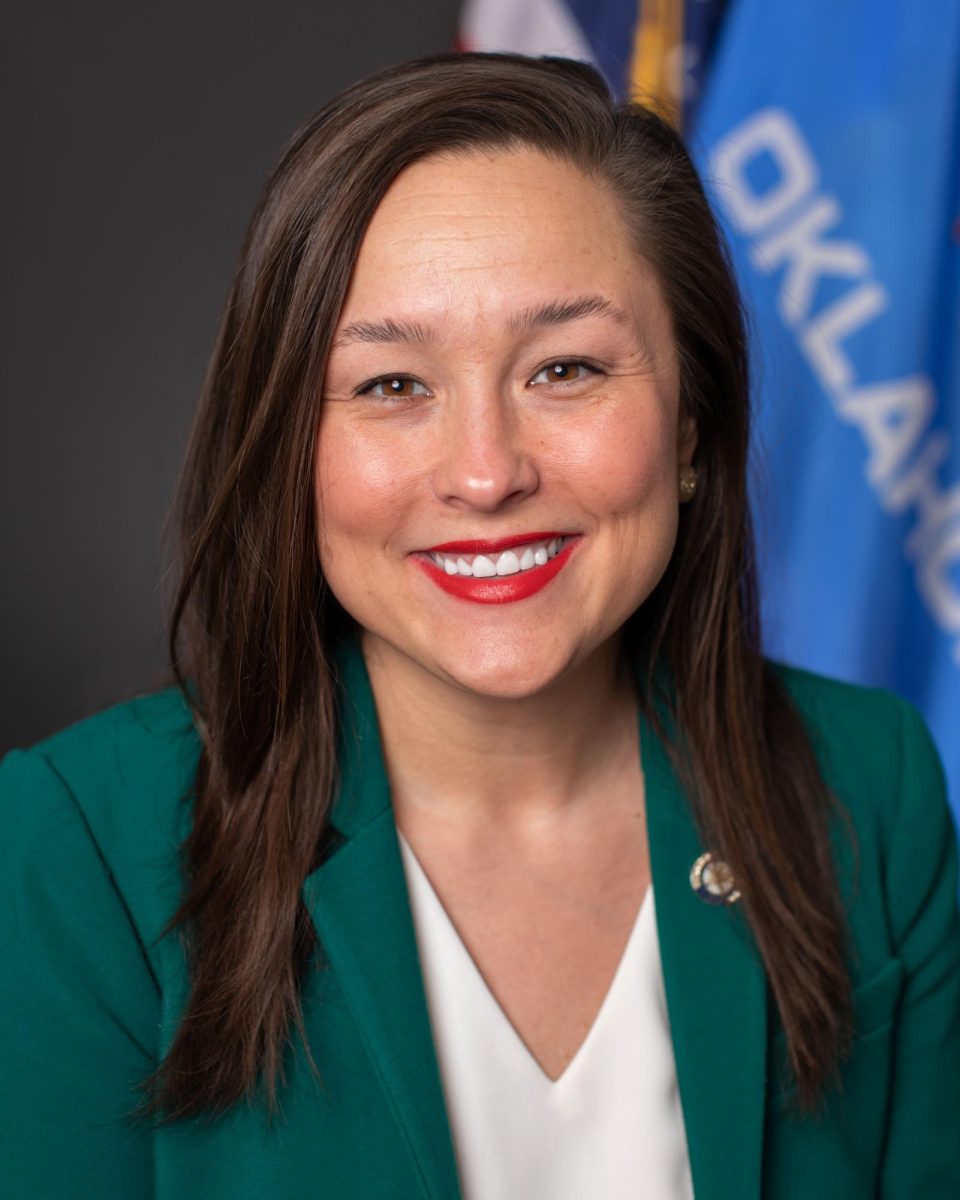
The Democratic and Republican parties in Oklahoma stand in stark contrast to one another when it comes to the 2026 gubernatorial primary elections. The Republican Party has nine candidates, while Democrats have three: former state Sen. Constance Johnson, Arya Azma, who ran for U.S. Senate in the 2022 Democratic primary, and House Minority Leader Cyndi Munson.
Munson announced her run for governor in April 2025. She said she believes her announcement “cleared the field,” and that her experiences campaigning in Oklahoma made her the best fit for the race.
“I know how to win races and build a coalition of voters that you need in order to win in Oklahoma as a Democrat,” Munson said.
She said the most pressing concern for voters will be issues that impact everyday Oklahomans, such as education, health care and the economy.
She said she does not see much challenge in terms of party, but one obstacle that has to be overcome is Oklahoma’s low voter turnout. According to a 2024 report from Oklahoma Voice, Oklahoma had the lowest voter turnout in the country in the 2024 election.
“My job is to energize and engage and motivate voters who are sitting on the sidelines,” Munson said.
When asked what she thought was the cause of Oklahoma’s low voter turnout, she attributed part of it to Oklahoma’s economic situation. According to census.gov, the median household income in Oklahoma in 2024 was $65,039, compared to the national median income of $83,730.
She said people working multiple jobs may not have time to vote.
“People are going to focus first on taking care of their home in a practical way,” Munson said. “Which means going to work, making money and getting a paycheck and being able to pay their bills.”
She added that the state does not invest enough in getting nonpartisan information to voters about elections in their counties. Unless the race is a competitive one, people aren’t being sent out to knock on doors and engage with voters. There is a heavy reliance on campaigns to educate voters both about the election and whoever the campaign is for.
Plans for Higher Education
Munson, a UCO graduate, was a recipient of Oklahoma’s Promise, a scholarship funded by the Oklahoma legislature that provides students whose families make $60,000 or less a year with full tuition coverage at public two-year or four-year universities. Munson said that while as a legislator she has done all she can to expand Oklahoma’s Promise, a bigger issue is “a priority of funding.”
She added the Oklahoma government needs to get control of rising tuition costs and other fees that universities charge students, and to keep in mind the costs that students face outside of academia, such as housing, gas and food.
“I hear constantly, specifically about UCO, of how many students leave their opportunity for a college degree because they have to go get a job,” Munson said.
Munson said she has worked with the Regional University System of Oklahoma (RUSO) on deferred maintenance for universities. This includes funding to keep campus buildings updated and safe, such as updating outdated HVAC systems.
“Without things that allow for a classroom to exist and to be safe, there’s not much we can do to expand programs and get students on campus,” Munson said.
She said policies like Governor Stitt’s Executive Order changing how tenure works at public universities and the dismantling of DEI programs would be vetoed if they came to her as governor, calling them an attack on academic freedom.
“I have voted against those bills. I have debated against those bills,” Munson said.
When asked about Senate Bill 1633, a bill that would make undocumented students in Oklahoma pay more expensive rates for tuition, Munson called it “short-sighted.” She said more educated people entering society is a net positive for the state and should be encouraged no matter a person’s documentation status.
She also supports raising starter teacher pay in Oklahoma, mentioning she has been part of many initiatives to incentivize Oklahoma college students to become teachers, such as student loan forgiveness programs. “Those don’t mean much if working Oklahoma teachers can’t afford to pay their bills,” she said.
“We have to fix that,” Munson said. Some of the solutions Munson mentioned are shrinking classroom sizes, putting more counselors in schools, and providing students and teachers with more support services. All these changes would require much more funding for public education, which she said would be a priority.
Munson added that she would be “working aggressively” to repeal the parental choice tax credit, an income tax return credit that allows eligible parents paying private school fees to get up to $7,000 back on their tax returns. Munson claimed that by the end of the year this tax credit will have sent $275 million to Oklahoma private schools that “have no transparency and oversight and no accountability of the state government or taxpayers.”
The Democratic primary will take place on June 16, 2026.
The Independent View attempted to contact Leisa-Mitchell Haynes, a Republican gubernatorial candidate who is also a UCO graduate, to discuss her political platform. The Independent View did not receive a response to requests for comment.