








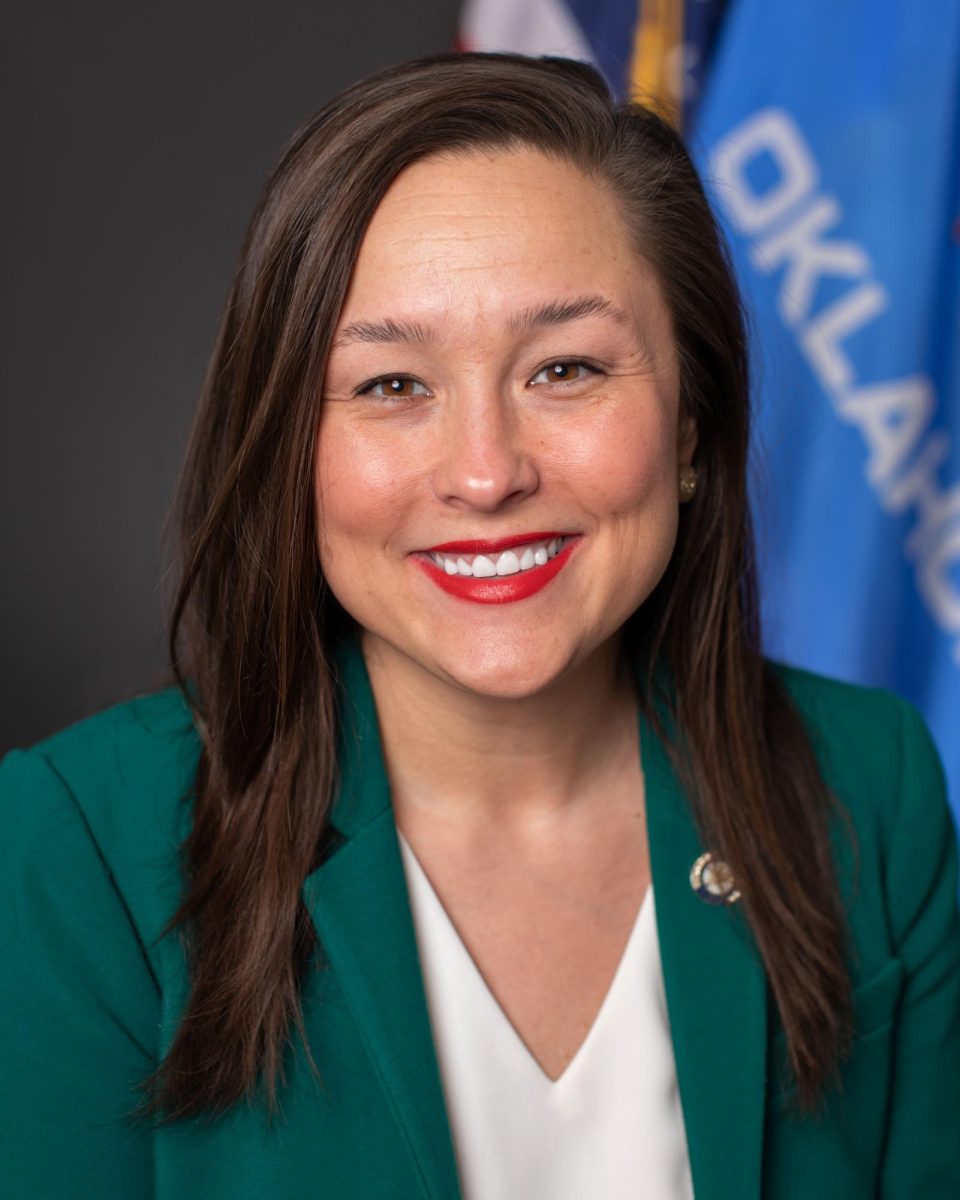


- Governor Kevin Stitt gave his eighth and last State of the State Address on February 3, 2026
- Stitt touched on issues such as Medicaid, tribal sovereignty, education and medical marijuana
- No mention was made of ICE or immigration
- Stitt celebrated the accomplishments of his term as governor
Governor Kevin Stitt’s time in office is coming to an end – he delivered his final State of the State Address on Monday at the Oklahoma State Capitol, and set forth his goals for the upcoming legislative session.
“I believe these last seven years have been the greatest in state history,” Stitt said in his address, and referenced Oklahoma’s lower than average unemployment rate of 3.5%, a “median income increase of $11,000,” and the five billion dollars Stitt added to the state savings account. Stitt also used Oklahoma’s refusal to adopt lockdown measures or vaccine mandates during the COVID-19 pandemic and talked about how while, “other states were letting boys play in girls’ sports, we protected religious liberties and individual freedoms.”
According to the Oklahoma Policy Institute, Oklahoma ranked as the eighth poorest state in the U.S. Census Bureau’s American Community Survey, with 14.9% of residents living in poverty, compared to the national average of 12.1%.
According to John Hopkins University’s Coronavirus resource center, which was last updated in 2022, Oklahoma had over one million confirmed cases of COVID-19 and over seventeen thousand deaths attributed to the disease. The tracker also claims sixty percent of Oklahomans are fully vaccinated against COVID-19.
Oklahoma has seen multiple laws passed that impact the LGBTQ+ community, including Senate Bill 796, which restricts activities in public universities that are related to diversity, equity and inclusion efforts. Senate Bill 796 caused the play “Boy My Greatness” to be cancelled during The University of Central Oklahoma’s fall 2025 semester, as previously reported by The Indy.
Stitt said that Oklahoma has reduced its prison population by 25%. According to a report from Oklahoma Watch, as of 2024, Oklahoma had the fourth highest imprisonment rate in the country. Oklahoma was ranked as having the highest imprisonment rate in 2018, but prison reforms helped cut down those numbers. However, according to Oklahoma Watch, in 2025 Oklahoma saw a 1.7% increase in its prison population.
Stitt laid out his plans for his last legislative session, including calling for State Questions to cap spending in the Oklahoma government, freeze property taxes and end medical marijuana in Oklahoma – something that Oklahomans voted for in a previous state ballot in 2018. Stitt also called for stricter requirements for federal programs such as SNAP and Medicaid.
17% of Oklahomans received SNAP benefits in 2024. 15% of Oklahomans are considered food insecure according to The Oklahoma State Department of Health. According to a report from the Oklahoma Health Care Authority, about 24% of Oklahoman adults and children are enrolled in Medicaid. The Oklahoma Hospital Association claims that Oklahoma has the second highest rate of uninsured citizens in the country.
“I’m calling on the Legislature to send a question to voters that would allow adjustments to Medicaid expansion so that we protect the program for those who really need it, not those who should be working,” Stitt said.
According to kff.org, an independent health policy organization, 64% of adults in Oklahoma who are enrolled in Medicaid also work.
Stitt also called for the role of State Superintendent of Instruction to change from an elected position to one appointed by the governor, pointing out that most states do not hold elections for the position.
“It keeps the focus on outcomes instead of politics,” Stitt said.
Stitt acknowledged during his address that Oklahoma has “lagged in education outcomes for some time” – likely referring to the fact that Oklahoma is ranked 50th in the nation for education.
Stitt called for the elimination of the Oklahoma Secondary School Activities Association, expanded charter school access and increased access to the Parental Choice Tax Credit, which provides a five thousand to seven thousand dollar income tax credit to parents whose children attend private schools.
“Let’s eliminate the cap,” Stitt said. ”Let the money follow the student.”
Stitt’s last political subject touched on was the issue of tribal sovereignty. Stitt referenced the 2020 Supreme Court decision McGirt v. Oklahoma, which ruled that the Muscogee Nation’s boundaries set in an 1866 treaty still held as Congress had never declared otherwise.
“In the wake of the McGirt decision, I have worked tirelessly to hold the line to keep one Oklahoma and protect the rights of every Oklahoman,” Stitt said.
Stitt publicly clashed with Attorney General and gubernatorial candidate Gentner Drummond in 2025 over tribal hunting and fishing laws, leading to the Muscogee nation filing a federal lawsuit on Jan.8, as reported by KOSU.
“Game wardens shouldn’t be afraid to ticket poachers,” Stitt said. “Many of us in this room have decried the DEI programs of the Biden administration, yet standby quietly when some say an Indian should be subject to a different set of laws.”
Stitt made no mention of ICE or immigration in his address. Stitt released a joint statement with the National Governor’s Association on Jan. 25, saying that, “we urge leaders at all levels to exercise wisdom and consider a reset of strategy toward a unified vision for immigration enforcement. We believe there are criminals in our country who must be held accountable, but moments like this demand thoughtful leadership, coordination, and clarity. Scenes of violence and chaos on our streets are unacceptable and do not reflect who we are.”
The full transcript of Stitt’s address can be read here.
