









- In times of political tension, protests become commonplace
- The protection of the right to peaceful assembly is expansive but not unlimited
- Oklahoma has specific laws governing protests and protestors
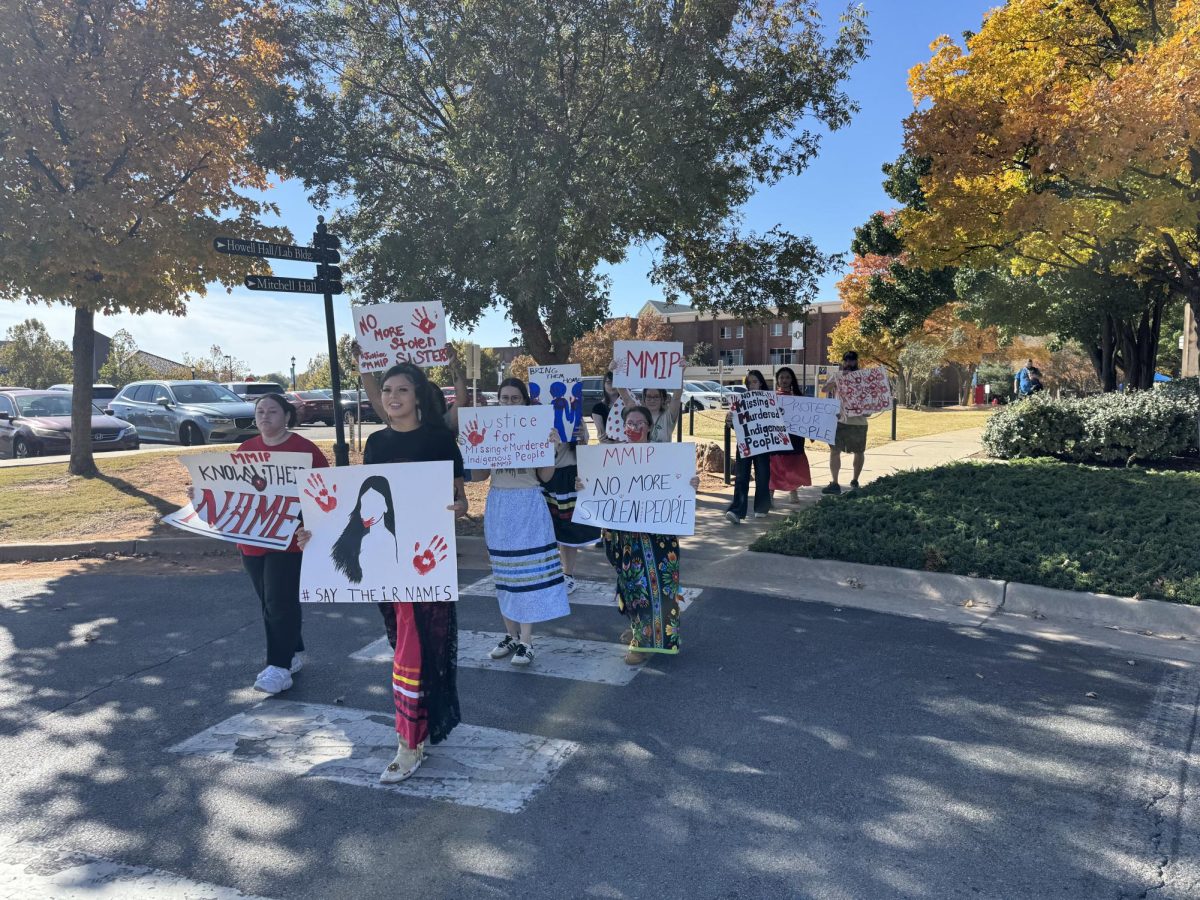
- Universities and The University of Central Oklahoma in particular have rules for protests taking place on their campuses
During a time of increasing political tension, protests are popping up across the nation. While citizens of the United States are guaranteed the right to peaceably assemble under the Constitution, laws govern where and when protests can occur.
According to the American Civil Liberties Union, protest rights are strongest in “traditional public forums,” such as streets, sidewalks and parks. Oklahoma passed House Bill 1674 in 2021, making it a misdemeanor to obstruct public streets, highways or roads. The bill defines “obstruct” as rendering a roadway impassable or unreasonably hazardous. The offense is punishable by a fine of up to $5,000, up to one year in prison, or both.
According to the Foundation for Individual Rights and Expression and the American Civil Liberties Union, permits are not required for protests that do not obstruct traffic, though police may intervene for safety reasons. Permits may be required for events that block traffic, close streets, or use sound amplification, but police cannot use permit rules to stop protests responding to breaking news events or deny permits based on controversial or unpopular views. Restrictions on routes or audio equipment may violate the First Amendment if they are not tied to legitimate public safety concerns.
Oklahoma residents have the right to photograph or film in public spaces, including law enforcement officers; on private property, property owners determine what can and cannot be filmed. Law enforcement cannot demand to view recorded material without a warrant, but they may order someone to stop filming if the activity interferes with legitimate police operations. Photos and video are protected nationwide, while laws governing audio recordings vary by state. Oklahoma is a one-party consent state for audio recordings, meaning they are legal as long as at least one person involved in the conversation consents to the recording. Both the ACLU and FIRE recommend documenting interactions with law enforcement in the event of a detention.
Oklahoma law provides specific protections for free expression on college campuses.
“The outdoor areas of campuses of public institutions of higher education in this state shall be deemed public forums for the campus community, and public institutions of higher education shall not create “free speech zones” or other designated areas of campus outside of which expressive activities are prohibited,” the law states. Universities may impose “time, place and manner” restrictions on campus expression, though the law emphasizes that these restrictions should be “narrow.”
The University of Central Oklahoma’s Campus Expression policy outlines the following “time, place and manner” restrictions on expressive activity:
- The number of participants in any given space can be restricted in accordance with local and state laws.
- Activities may be restricted if they pose a threat to campus safety, put individuals or property at risk, or disrupt the “continuity of the educational process.”
- Signs and banners must be attended by at least one person at all times.
- Vehicles and “heavy equipment” are prohibited.
- No items such as signs can be attached to “trees, bushes, benches, light poles, buildings, vehicles, public art, or permanent signs or fixtures.”
- No one may carry open flames, torches, bats, or shields. No one may wear masks, in accordance with Oklahoma Statute (21 O.S. 1301), which states that “It shall be unlawful for any person in this state to wear a mask, hood or covering that conceals the identity of the wearer during the commission of a crime or for the purpose of coercion, intimidation or harassment.”
Under the Supreme Court’s decision in Clark v. Community for Creative Nonviolence, time, place and manner regulations must meet three criteria.
- They must be “justified without reference to the content of the regulated speech.”
- “Narrowly tailored to serve a significant governmental interest.”
- “Leave open ample alternative channels for communication of information.”
UCO’s Campus Expression policy states that individuals or organizations “should” provide at least 24 hours’ notice to prevent material and substantial disruption to UCO or others’ expressive activity.


